
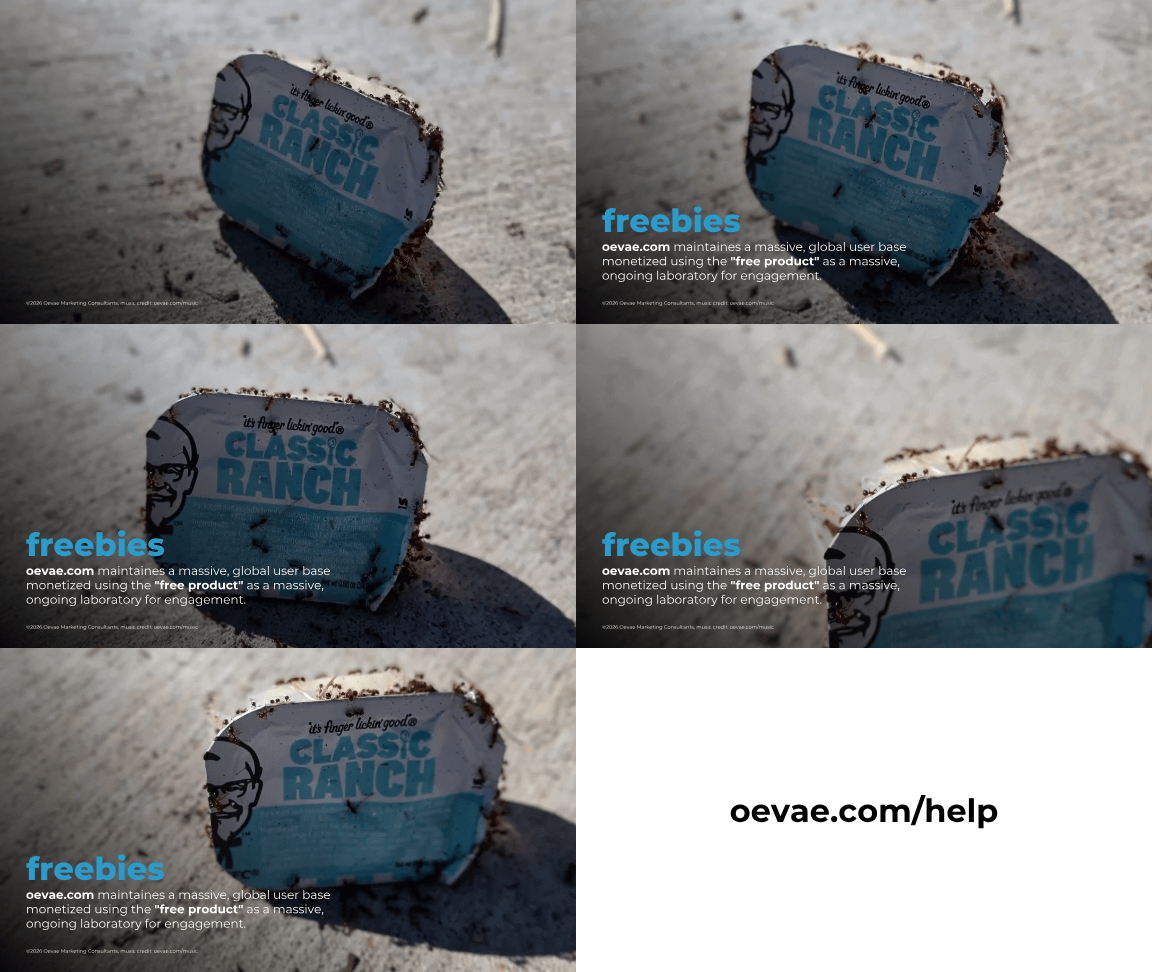
Free does not mean worthless. Sometimes, something as simple as a free sample, a free meal, a free trial or a useful digital tool can remove the hesitation standing between curiosity and becoming a customer. From AOL putting trial discs into millions of homes to KFC creating lines for free chicken, Dropbox rewarding referrals and Spotify letting people listen before they subscribe, some of the world’s largest brands have used “free” as the beginning of a relationship—not the end of a sale.
For a small business owner, the word free can sound dangerous.
Free costs money. Free takes time. Free can attract people who never intend to buy anything.
All true.
But when the free offer is connected directly to the value of the product or service, it can do something advertising alone cannot:
It lets the customer experience the answer before asking them to believe the promise.
AOL Put the Internet in the Mailbox
Before internet access was ordinary, AOL had a problem: people could not fully understand the value of getting online until they actually got online.
So AOL gave them the opportunity to try it.
Its aggressive direct-mail campaign sent free-trial floppy disks and CDs to millions of households. The Smithsonian reports that more than 10% of recipients of AOL’s first major mailing signed up, and AOL eventually spent hundreds of millions of dollars expanding the strategy. Former AOL marketing chief Jan Brandt later said the company was registering a new subscriber about every six seconds at the campaign’s height.
By the end of 2001, AOL reported 25.2 million domestic members.
The disc wasn’t really the product.
The experience was the product.
Sources: Smithsonian · SEC filing
KFC: When “Free” Works Too Well
KFC provides another powerful lesson in freebie marketing—including what can happen when demand outruns the plan.
In 2009, KFC partnered with Oprah Winfrey to offer a downloadable coupon for a free grilled chicken meal. The response was enormous. More than 10 million coupons were reportedly downloaded, restaurants were overwhelmed, some locations ran short of product, and KFC ultimately moved customers to a rain-check system.
The promotion proved that “free” could create massive engagement—but it also showed why fulfillment, limits and capacity have to be part of the strategy.
KFC approached the idea much differently in 2025 with its “Free Bucket On Us” comeback campaign. Customers could receive a free eight-piece bucket of chicken or tenders with a $15+ online purchase through KFC.com or the KFC app. The offer required a KFC Rewards account and was limited to one redemption per account.
Same powerful word: FREE. Better controls.
That evolution matters for small businesses. The objective is not simply to generate the biggest response possible. It is to create an offer that attracts attention and can be fulfilled profitably without overwhelming the business.
Sources: The Hollywood Reporter · KFC
Companies That Used Direct Mail, Trials or Free Offers to Acquire Customers
- CompuServe: AOL’s primary competitor in the early 1990s also distributed trial software to introduce consumers to online services.
- Prodigy: Used trial access and promotional software while competing for early dial-up customers.
- EarthLink: Distributed installation software and promotional access offers as internet adoption expanded.
- JDate: Used trial-oriented customer acquisition to reduce the barrier to testing online dating.
- ButcherBox: Uses free product add-ons, including meat offers tied to qualifying subscriptions, to encourage new customers to try the service.
- HelloFresh: Regularly introduces customers through discounted or free first-box promotions.
The tactic did not disappear when floppy disks disappeared.
It simply changed form.
Physical “Freebie” Campaigns
Companies have also used samples to let the product make its own argument:
- KFC: Used free food offers to generate enormous trial and engagement—from the overwhelming 2009 Oprah grilled-chicken giveaway to the more controlled 2025 “Free Bucket On Us” digital promotion.
- Country Time Lemonade: Lemonade samples and promotional kits encouraged trial.
- Folgers Coffee: Single-use coffee samples gave consumers a low-risk reason to consider switching brands.
- Tide: Single-load detergent samples let performance become part of the sales pitch.
- Colgate and Crest: Travel-size toothpaste samples introduced households to products designed around repeat purchasing.
- Splenda: Sample packets allowed consumers to test the taste before buying a larger package.
- KIND Bars: Sampling placed the actual product into consumers’ hands rather than merely telling them what it tasted like.
The common denominator? Reduce the distance between hearing about the product and experiencing the product.
Free Went Digital
Today’s equivalent might cost almost nothing to distribute.
Instead of mailing a sample, businesses can offer access, storage, functionality, education, a limited service, a demonstration or a useful tool.
Digital Freemium and Free-Trial Growth
- Dropbox: Gives users additional free storage for successful referrals. Dropbox Basic users can earn up to 16 GB through referrals, creating a built-in incentive for customers to introduce other customers.
- Spotify: Offers useful ad-supported access instead of requiring payment before someone experiences the service. Spotify has said more than 60% of Premium subscribers previously used the free tier.
- Adobe: Uses full-feature trials to let customers experience professional software before committing to an ongoing subscription.
- Duolingo: Keeps its core learning experience accessible without a hard paywall, using the free product to build enormous reach before monetizing through subscriptions, ads and other upgrades.
- Canva: Offers a substantial free design platform while reserving additional tools, brand features and assets for paid plans.
- Zoom: Its accessible free tier lowered the friction of inviting someone else to a meeting and helped turn user-to-user invitations into distribution.
- HubSpot: Built an entry point around free CRM tools, allowing businesses to begin managing customer relationships before needing more sophisticated paid marketing and sales products.
Additional sources: Dropbox (Install app, earn 500 MB) · Spotify · Duolingo · Canva
Notice What These Companies Did Not Do
They did not simply yell:
FREE! FREE! FREE! No, it doesn't. Their FREE offer performed a job.
Dropbox gave you storage.
Spotify gave you music.
Canva let you design.
Duolingo let you learn.
HubSpot let you organize customer relationships.
AOL let you experience the internet.
KFC let customers taste the promotion itself.
That distinction matters.
What Could Your Small Business Give Away?
It does not necessarily need to be merchandise.
A useful free offer could be:
- a sample
- a consultation
- a limited trial
- a downloadable guide
- a small tool
- a diagnostic
- a template
- a demonstration
- a complimentary upgrade
- limited access to a larger service
- a useful piece of information people would otherwise spend time finding themselves
The goal isn’t to give away the store.
The goal is to give someone enough evidence to confidently take the next step.
Don’t Risk It All to Find Out
This is also where small businesses can get into trouble.
A clever idea isn’t automatically a good business decision. If you are old enough to remember the food court in a shopping mall, the restaurants would give out free food samples – a classic sensory marketing tactic. It uses the power of smell, taste, and instant gratification to break down consumer resistance, turning casual walkers into paying customers. Samples remove the risk (Overcoming Hesitation) of trying an unfamiliar dish, especially at fast-casual Asian or specialty eateries. And, tetting something for free creates a subtle psychological urge (The Rule of Reciprocating) to return the favor by buying a full meal.
At Oevae Marketing Consultants, we can help a business approach an idea in three steps:
- Identify what could genuinely create value or remove hesitation for your prospective customer.
- Eliminate ideas that are too expensive, attract the wrong audience, create fulfillment problems or don’t lead naturally toward the paid product.
- Confirm the strongest direction through a controlled test before committing significant time, money or resources.
You don’t need to know with absolute certainty that an idea will work.
You need a way to learn without risking it all.
“Sometimes, all you need is a little help.” — Gibrón Williams
And very soon, we’re going to practice a little of what we’re talking about here with something new we’ve been building around Móneta World.
But that’s another conversation.
For now, ask yourself one question:
What could you let a prospective customer experience today that would make tomorrow’s buying decision easier?
Make a brand difference.™

No comments:
Post a Comment