
Construction. Traffic. Road Closed.
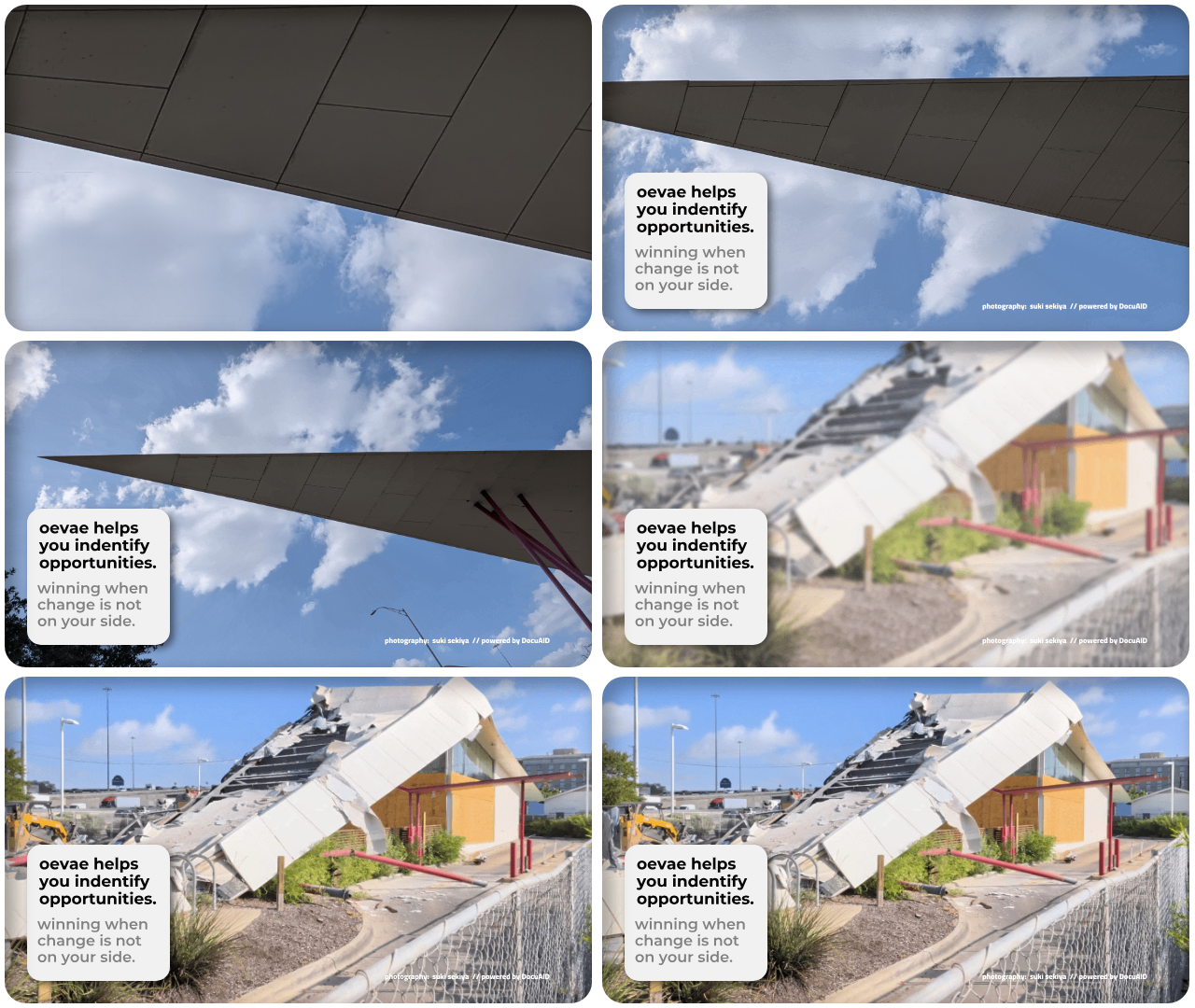
Today, ten years later, that building is gone — not because the burgers stopped selling or the brand stopped growing, but because the environment around the business changed. And perhaps, one of the clearest lessons a small-business owner can take from the enormous transformation underway along I-35. A smart strategy can be right for years and still have to change when the world around it changes.
P. Terry's had done many of the things businesses are told to do. It chose a high-traffic location, aligned itself with a major transportation corridor, invested in memorable design and deliberately chose Extreme Branding so the building itself communicated before a passing driver ever read the restaurant's name.
The strategy worked. The restaurant became a landmark. Then the artery changed.
Change Doesn't Ask Permission From the Business Plan
For businesses around Rundberg Lane, Braker Lane and the surrounding North Austin corridor, the problem is usually less dramatic than losing an entire building, but the principle is the same. Mobility35 construction is changing the physical environment customers learned to navigate.
An entrance moves. A ramp closes. Construction barrels obscure a driveway. A familiar turn becomes inconvenient. A five-minute lunch trip can become a twenty-minute nuisance.
The business can be fully open and ready to serve while appearing, from the driver's perspective, difficult to reach.
That makes this a communication problem before it becomes a marketing problem.
TxDOT has to explain how motorists move through a massive transportation project. The business owner has a simpler responsibility: tell the customer how to get to the front door today.
Customer Road Map
Here's the idea behind a Customer Road Map. Instead of asking customers to interpret a construction diagram, give them the pieces of information they actually need: the best exit, the available entrance, where to park and whether another route will save time.
A QR code connected to a Mini Link can make that information flexible. The same code printed on a window, receipt, menu or temporary sign can point to the best route today and a different route next week. The physical communication stays in place while the information behind it changes.
That is why a QR Code Machine and Mini Link make sense in a construction environment. They are not interesting because they are technology. They are useful because they allow communication to move when the road moves.
Businesses should also keep up with current Mobility35 information rather than waiting for customers to explain the latest closure. TxDOT's Mobility35 site provides current project information, while businesses can also sign up for Mobility35 email updates.
Traffic Doesn't Disappear. It Goes Somewhere.
There is another side to construction that receives considerably less attention.
When a customer decides a familiar restaurant is suddenly too difficult to reach, that person usually does not stop eating lunch. They choose another restaurant.
When an exit becomes inconvenient, the business before the exit may suddenly become more attractive than the business after it. One company loses spontaneous traffic. Another gains it.
So while one owner is asking, “How do I keep my customers coming?”, another small-business owner may be looking at an unexpected increase in traffic and asking, “How do I keep these new people after the construction is over?”
Imagine someone walking into a restaurant and saying, “I normally go farther down the road, but I'm not fighting that construction today.”
Now the business has to earn the second visit.
Maybe the food is better than expected. Maybe the service is faster. Maybe the customer likes the atmosphere or discovers a lunch special or menu item they never knew existed. They may have arrived because of a detour and return two weeks later because they found something worth returning to.
Construction may create the first visit. The experience creates the second.
That is why temporary traffic should not automatically be treated as temporary business.
Give People Something Worth Traveling For
Directions solve one form of friction. They do not solve the entire decision.
A customer deciding whether to make an inconvenient trip may also want to know what is on the menu, what it costs, what the food looks like and what kind of experience is waiting at the other end.
Real-world examples show how much attention practical and visual information can attract. A CVS photography service menu photograph accumulated 7,963 views. Vaqueros BBQ food truck menu reached 11,661. The Asian Mint reached 35,205 views for a dining area photograph. One restaurants Google Review photograph of the ABC Burger at Wizards Sports Café accumulated 418,206 views, while a six-second Donkey Mo's food Google Review video passes 10,000 views.
Those numbers do not mean every photograph will perform the same way. They demonstrate something more useful: customers consume information visually, and useful or appetizing information can keep working long after it is posted.
The service-menu photograph answers a practical question. The food-truck menu lets somebody make a buying decision before arriving. The restaurant interior sells atmosphere. The food image sells appetite. And six seconds of movement can sometimes communicate more effectively than an elaborate commercial.
Google Search, Maps, photographs, video and reviews can introduce somebody to a business. But all of that happens inside Google's environment.
A restaurant's own digital menu or Digital Flipbook can continue the experience with food photography, short video, prices, specials, directions, parking instructions, construction access information and the business's own visual identity.
The goal is not to replace Google. It is to let Google make the introduction while giving the business somewhere of its own to continue the conversation.
A New Guest Can Leave a Longer Digital Trail Than the Visit
More guests can also create more digital exposure.
This is not about pestering every customer for another review. It is about benefiting from the photographs, videos, reviews and detailed experiences people naturally share when something is worth documenting.
A customer visits because the normal route to another restaurant was inconvenient. They try something new. Maybe they take a photograph. Maybe they write about the experience. The business responds.
The meal ends. The digital interaction does not. One review-related image at Donkey Mo's Korean Fried Chicken approached 10,000 views in roughly 30 days.
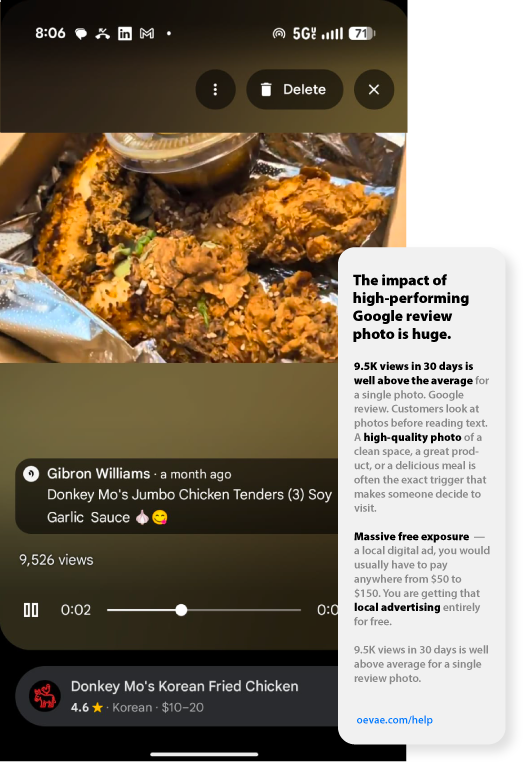
Somebody else can discover that contribution tomorrow. Another customer can read it next month. A thoughtful business response remains visible to future customers who were never part of the original transaction.
That is how temporary traffic can begin producing a longer digital tail.
If a business wants to make returning easier, a QR code, Mini Link, branded Digital Flipbook or Lead Capture experience can provide a simple next step. Not because everybody needs to enter a marketing funnel, but because returning should be easier than rediscovering.
The Difference Between a Location and a Business
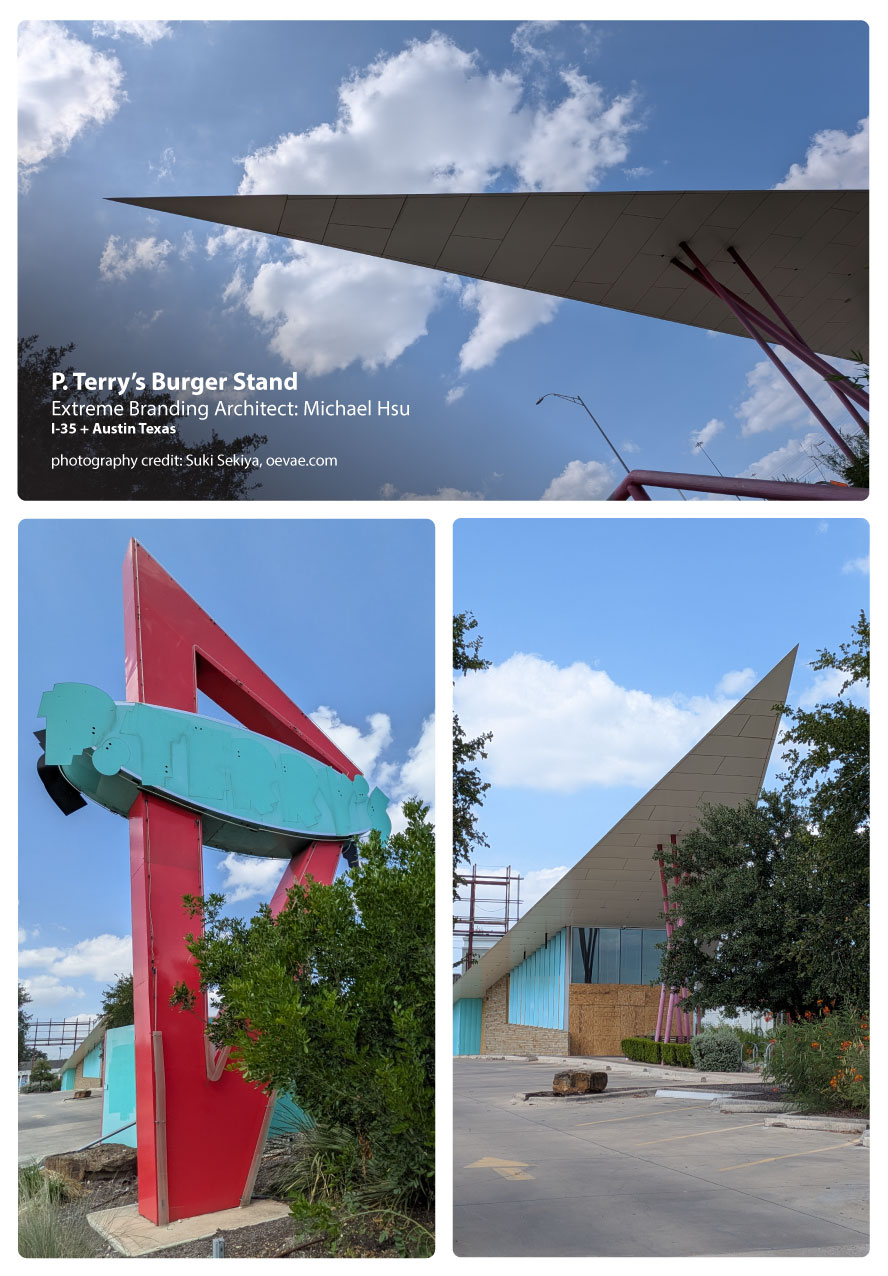
That brings us back to P. Terry's Burger Stand – The Capital Plaza building mattered precisely because it was not generic. P. Terry's deliberately chose Extreme Branding. Michael Hsu's futuristic roofline, color, geometry and relationship to I-35 were intentional. The building itself became part of the message.
The highway changed. Building demolished. Landmark disappeared.
The brand did not.
Adaptability allows the business to continue.
Small businesses have lived through enough disruption to recognize the larger pattern. COVID accelerated curbside pickup, delivery, digital ordering and contactless transactions. Other major events changed how businesses think about security and access. Technology continually changes how customers discover, evaluate and buy.
Mobility35 is changing something more physical: how people move through Austin.
The disruption itself is not necessarily the opportunity. The response can be.
How Small Businesses Can Maximize the Benefits of Change
For one business, adapting may mean giving regular customers a clearer route to the parking lot. For another, it may mean recognizing that unfamiliar customers are walking through the door because somebody else's route became inconvenient.
Another business may discover that its menu deserves to be easier to find, that a six-second video can communicate appetite, or that Google's reach becomes more valuable when it leads into a branded experience the business controls.
The larger lesson is not to fear change or pretend every disruption is good. It is to avoid confusing a successful strategy with a permanent environment.
P. Terry's had the traffic, the product, the brand, the location and the extraordinary building.
The environment still changed.
That is not an argument against long-range planning. It is an argument for putting adaptability inside the plan.
Useful business information should reaffirm what owners already know, confirm what they suspect, establish something they did not know and help them benefit from something they did not know was available to them.
Ten years ago, a futuristic roof pointed into the Austin sky beside I-35.
Today, the building is gone. The company continues. The highway continues. Austin continues.
Traffic moves.
Opportunity moves with it.
Smart businesses redirect opportunity.

No comments:
Post a Comment