LISTENING TO “Remitly's WhatsApp Email Marketing: How Simplicity, Animation, and Customer Convenience Drive Engagement”
0:00
Ready. Press play to listen.
NOW READING
Press play to follow along.
Powered by DocuAID
Remitly's introduction of its improved WhatsApp chat experience demonstrates how effective email marketing doesn't always require elaborate graphics or dramatic animation. Sometimes, the strongest message answers one simple question: How does this make my life easier?
In this commentary, we'll explore how Remitly combines visual storytelling, color psychology, and practical messaging to introduce a more convenient customer experience. We'll also examine where thoughtful creative adjustments could make the campaign even more engaging.
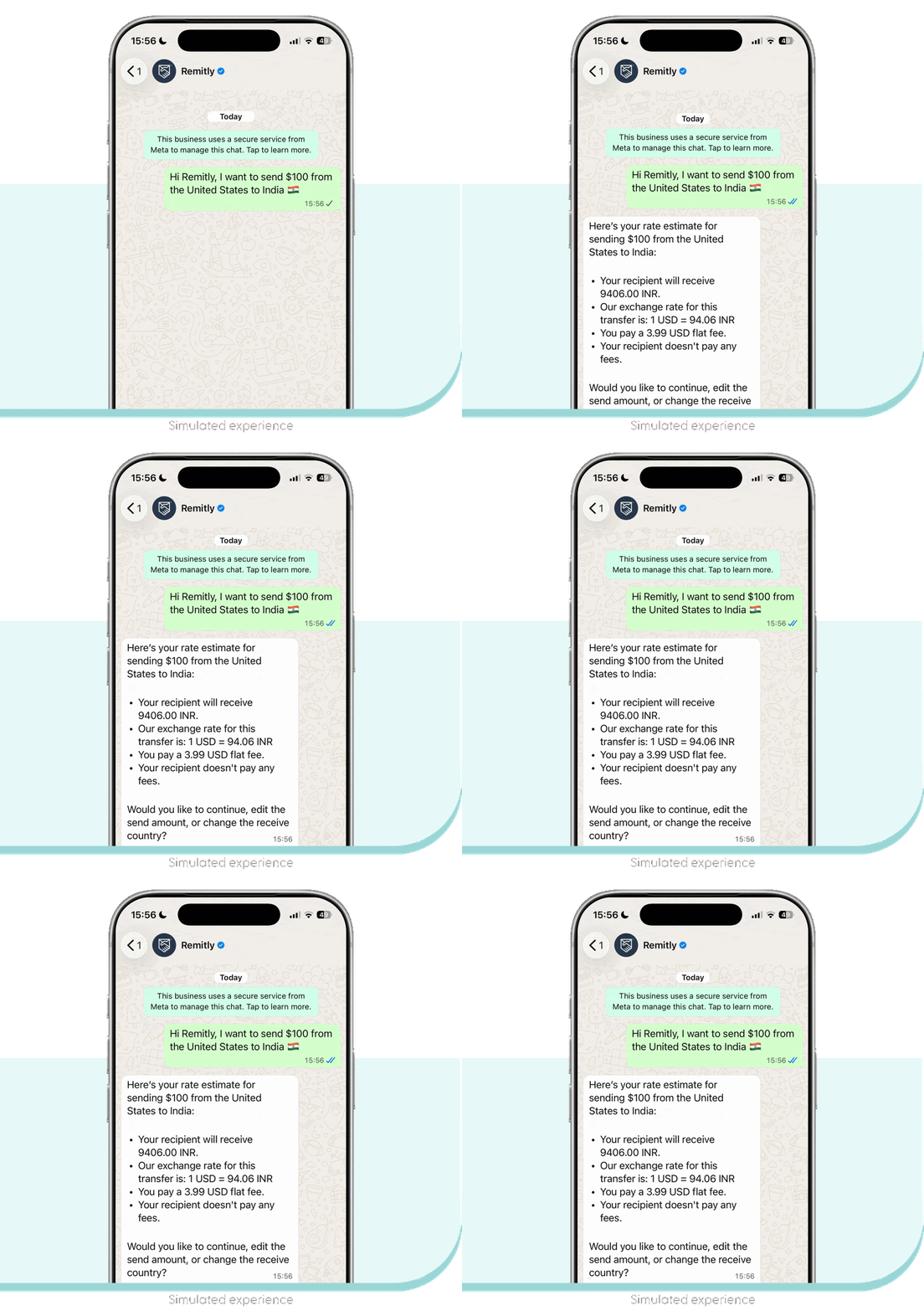
Remitly uses animation to demonstrate how customers can engage through WhatsApp.
The email opens with a confident navy-blue headline, "New: Our WhatsApp chat, your way," immediately communicating its customer-centered purpose. Navy blue suggests stability, professionalism, and trust—valuable associations when discussing financial transactions. The pale aqua background introduces calmness and approachability, balancing the seriousness of money transfers with a welcoming presentation.
Three elements make this campaign particularly effective:
Animation demonstrates the product. The smartphone and WhatsApp conversation illustrate how customers can communicate with Remitly rather than relying exclusively on written explanations. The movement helps attract attention while reinforcing the service's usefulness.
Color psychology supports the message. Navy blue communicates reliability and professionalism, while pale aqua introduces a softer, reassuring atmosphere. Together, they help make a financial service feel accessible.
The call to action reduces friction. "Send on WhatsApp" invites customers into a familiar communication environment rather than requiring them to learn an entirely new interface.
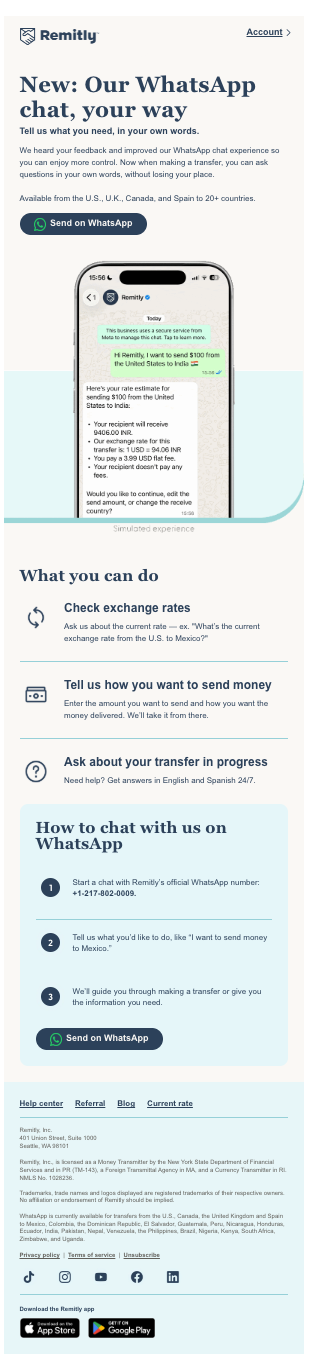
The supporting content is equally disciplined. Three practical benefits—checking exchange rates, arranging transfers, and requesting assistance—give readers enough information to decide whether the service meets their needs. Numbered instructions eliminate uncertainty without overwhelming the audience.
Complete Remitly email showing the WhatsApp feature, benefits, instructions, and repeated call to action.
Where could Remitly improve?
CTA visibility: The primary "Send on WhatsApp" button is relatively small. Greater visual prominence, additional spacing, or stronger contrast could help attract more clicks.
Animation and interaction: A subtle progression through the WhatsApp conversation, emphasizing the customer's question and Remitly's response, could make the experience more engaging.
Visual continuity: A small animated accent connecting the smartphone demonstration to the CTA could guide attention toward the next action without introducing unnecessary distractions.
One particularly smart decision is repeating the CTA after the instructions, giving readers another opportunity to engage once they understand the service.
Ultimately, Remitly demonstrates that successful animated email marketing isn't about movement for movement's sake. It's about using motion, design, and meaningful information to tell a complete story.
What have we learned?
Small businesses can benefit from demonstrating their services visually, choosing colors that support the intended emotional response, and making the next step unmistakably clear. The goal isn't simply to attract attention—it's to turn that attention into meaningful customer engagement.
From the 7-Eleven Evolution Stores in Dallas to 7NOW packaging, coffee culture, and everyday customer service, this is a look at how a familiar retail brand keeps evolving—and why every customer interaction remains an audit or an audition.
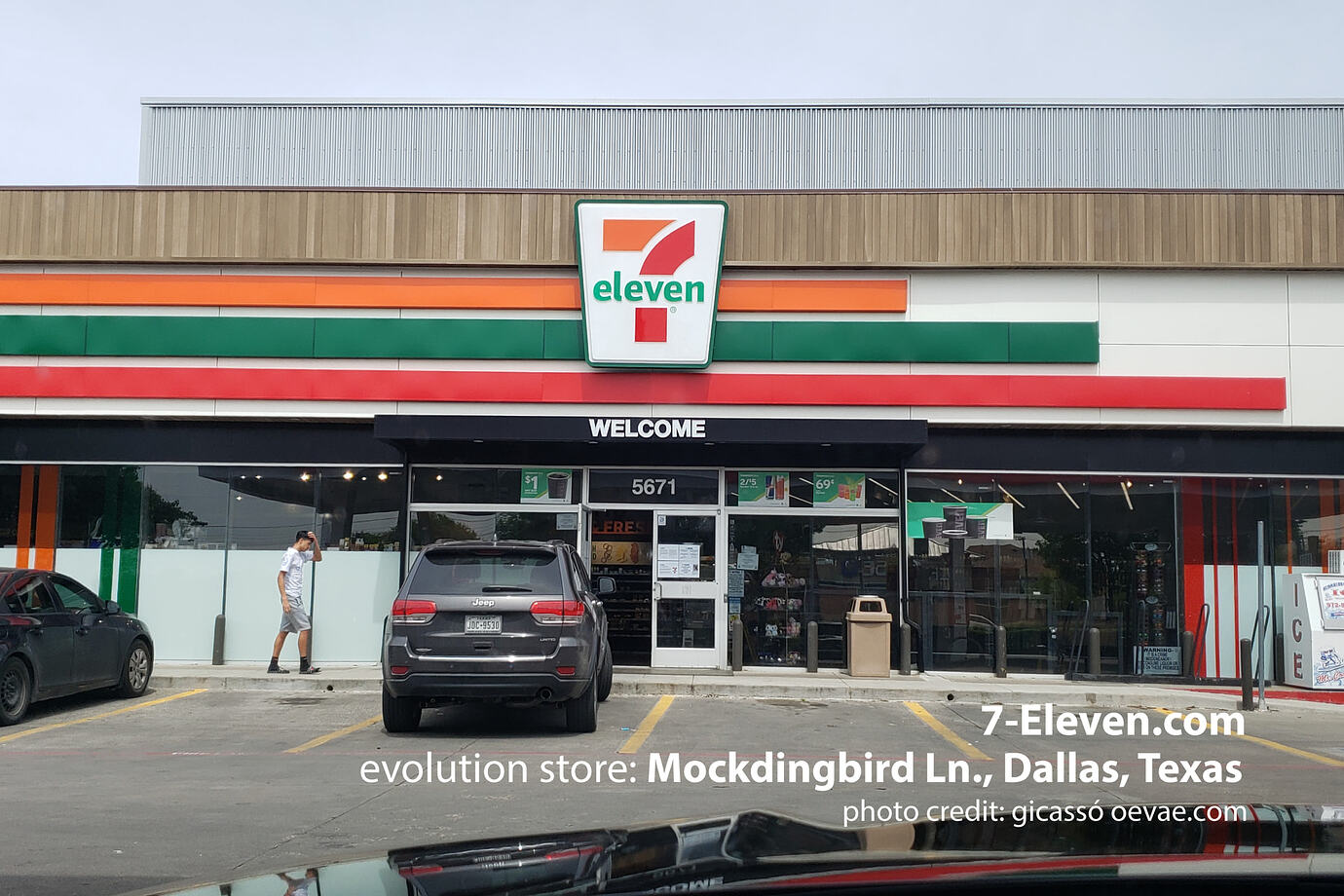
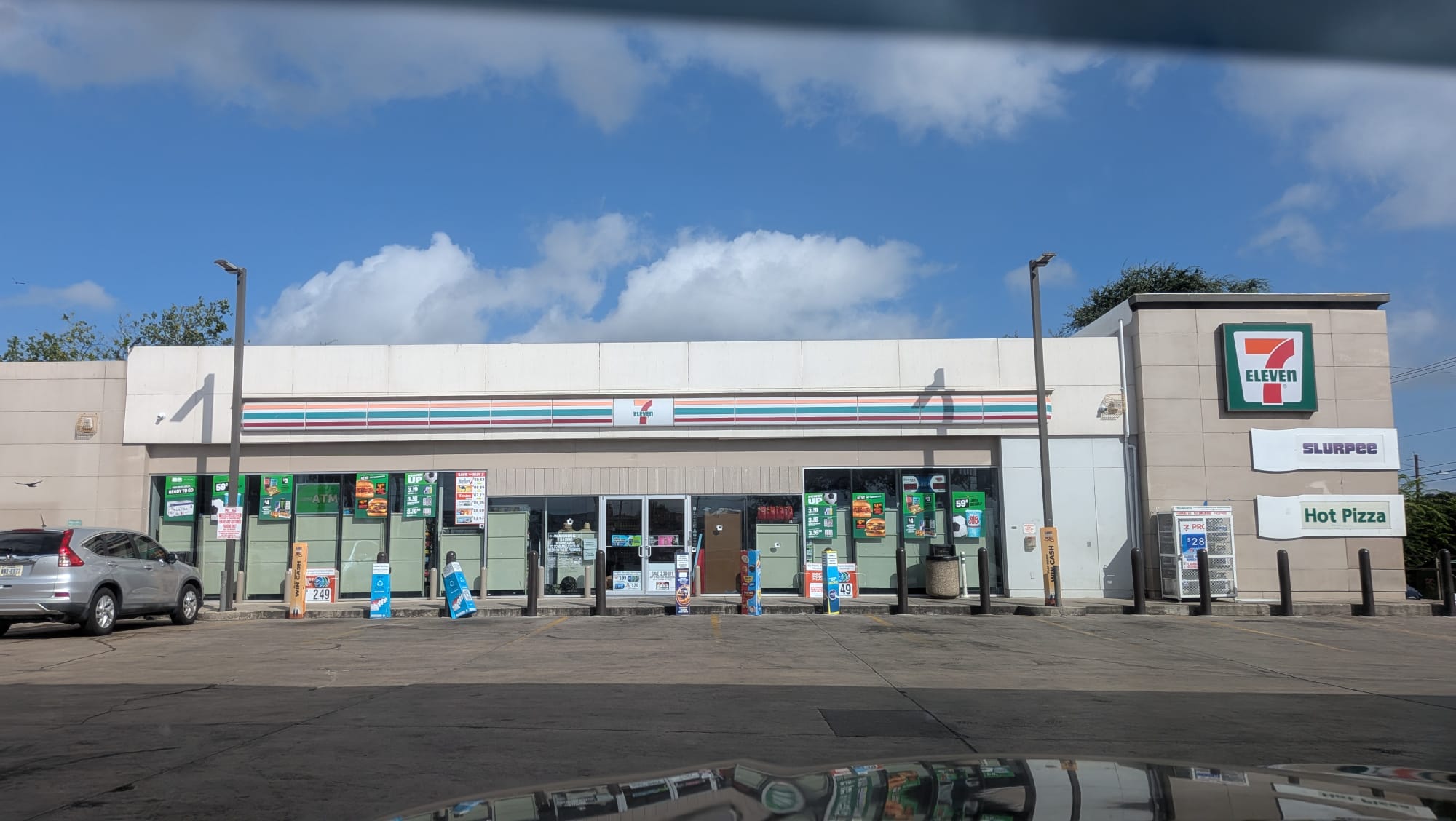
DALLAS, TX 2026, 7-Eleven is very popular. In fact, the 7-Eleven Store Support Center (corporate headquarters) is located there, so we’ve seen extensive upgrades to the brand image and product offerings in the past 5-6 years.
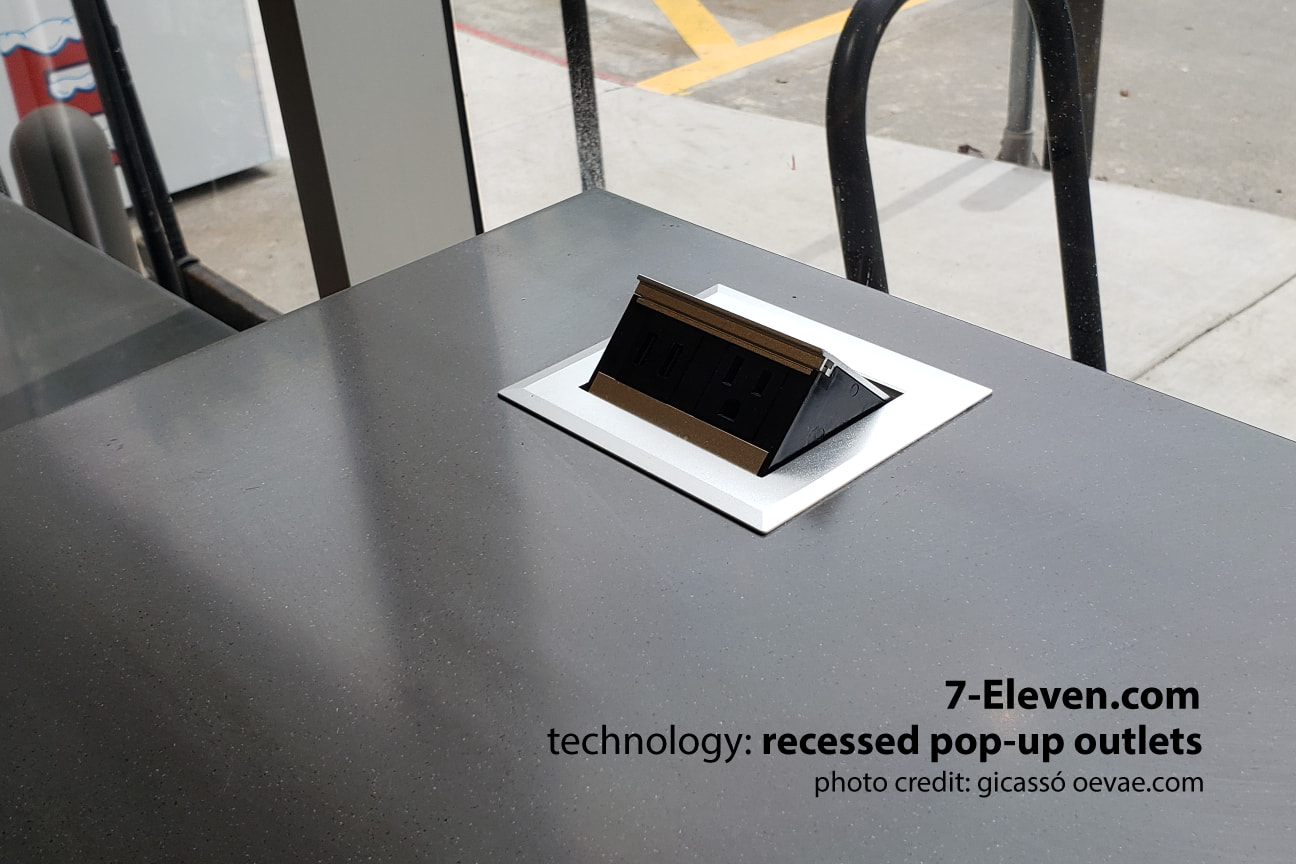
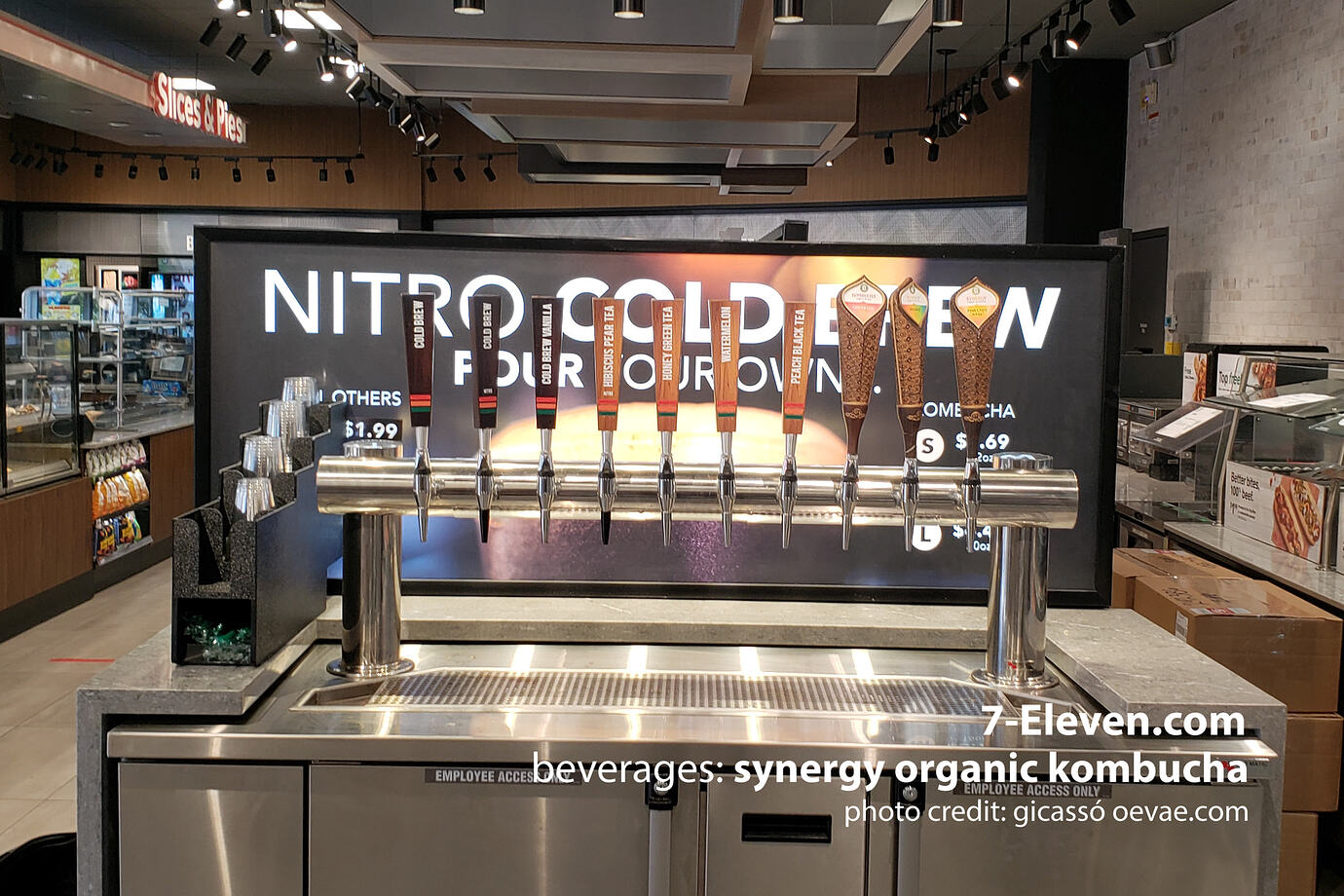
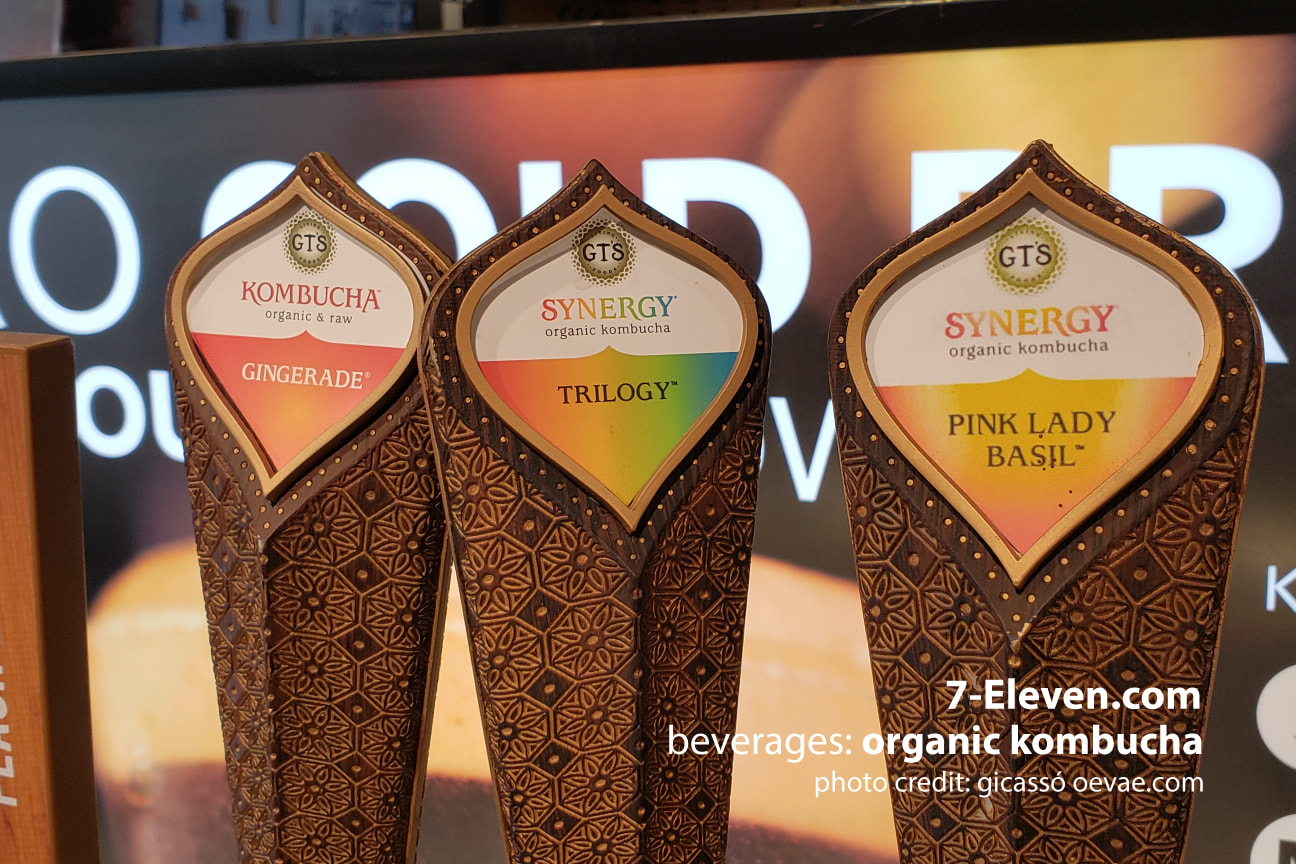
One of the Evolution Stores is a two-story 7-Eleven with a restaurant, a premium cigar humidor, and the latest digital innovations (recessed pop-up outlets); another has Kombucha on tap, and both have the 7-Eleven Evolution Store concept with Nichiha fiber cement wall panels, VintageWood designed to give the stores a “distinguished look” without the high maintenance of real wood.
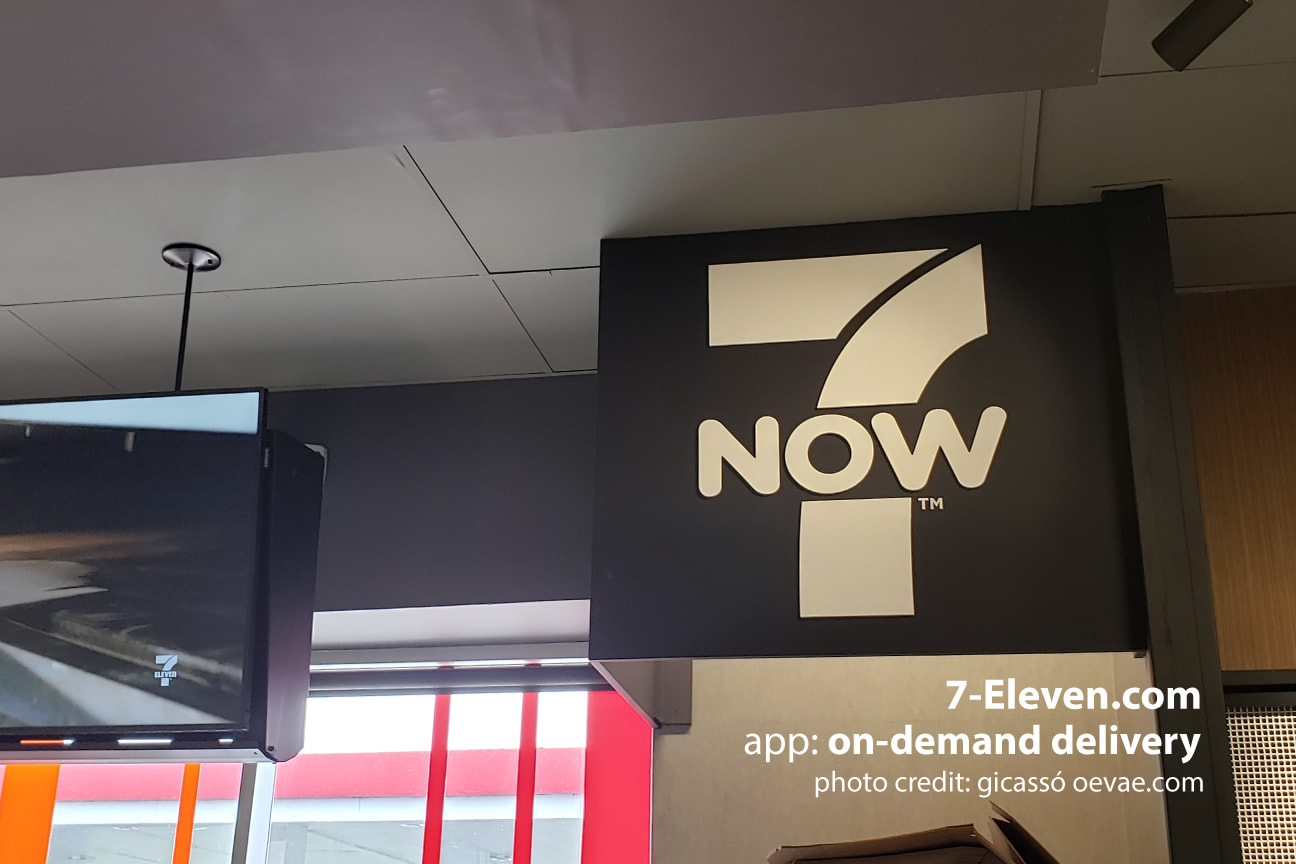
I’ve not tried 7NOW, “7-Eleven’s dedicated on-demand delivery app and service, which delivers food, alcohol, beverages, and groceries in about 30 minutes. The service operates 24/7, enabling customers to order over 3,000 items, including Slurpee drinks, pizza, and household products, directly to their door” (7-Eleven Corporate).
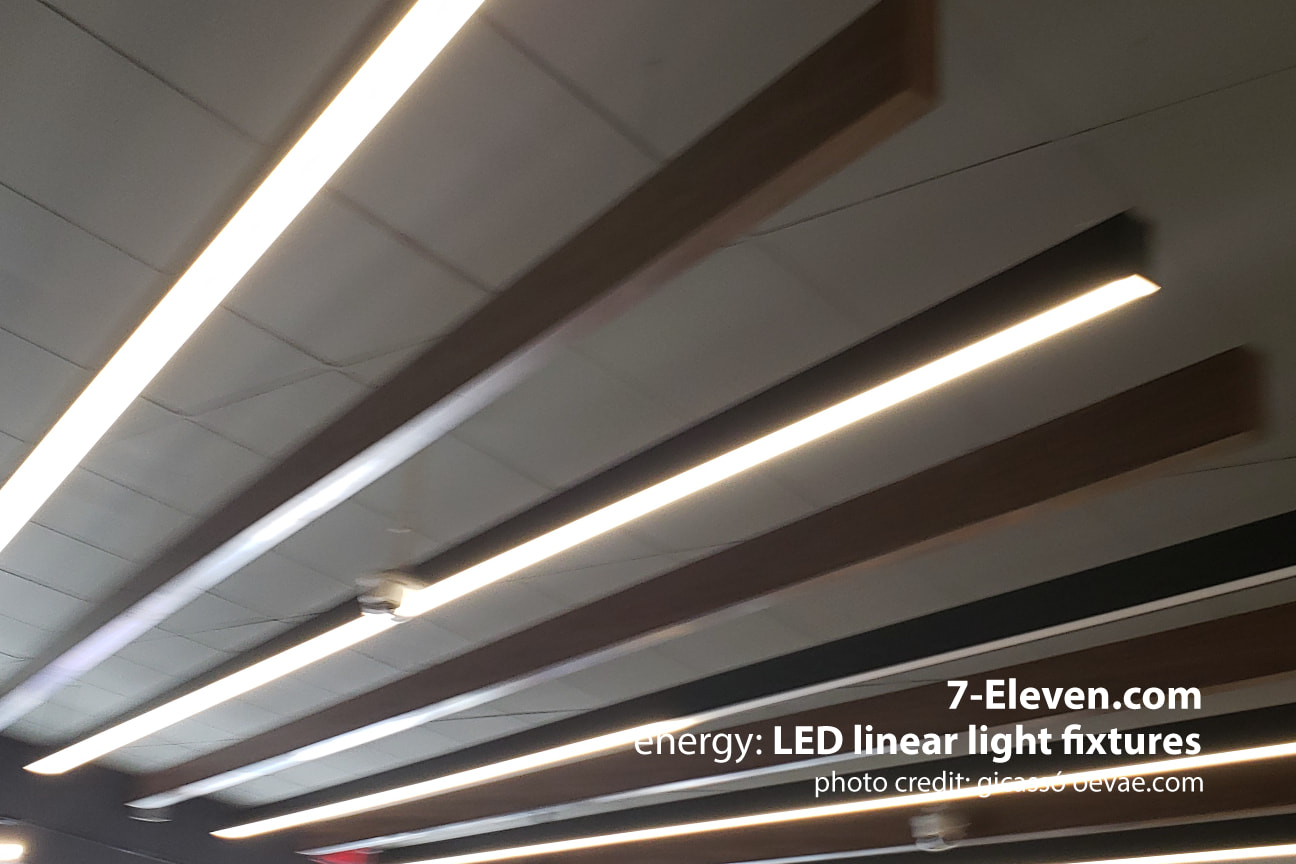
I really admire the LED tracks that project light downward efficiently, avoiding the need for bulbs that scatter light randomly – very calming, and no eye strain for customers like me. I read that 7-Eleven’s “Evolution” stores serve as a testing ground for their “Green Challenge 2050” initiative, which targets a 50% reduction in greenhouse gas emissions (CO2e) by 2030.
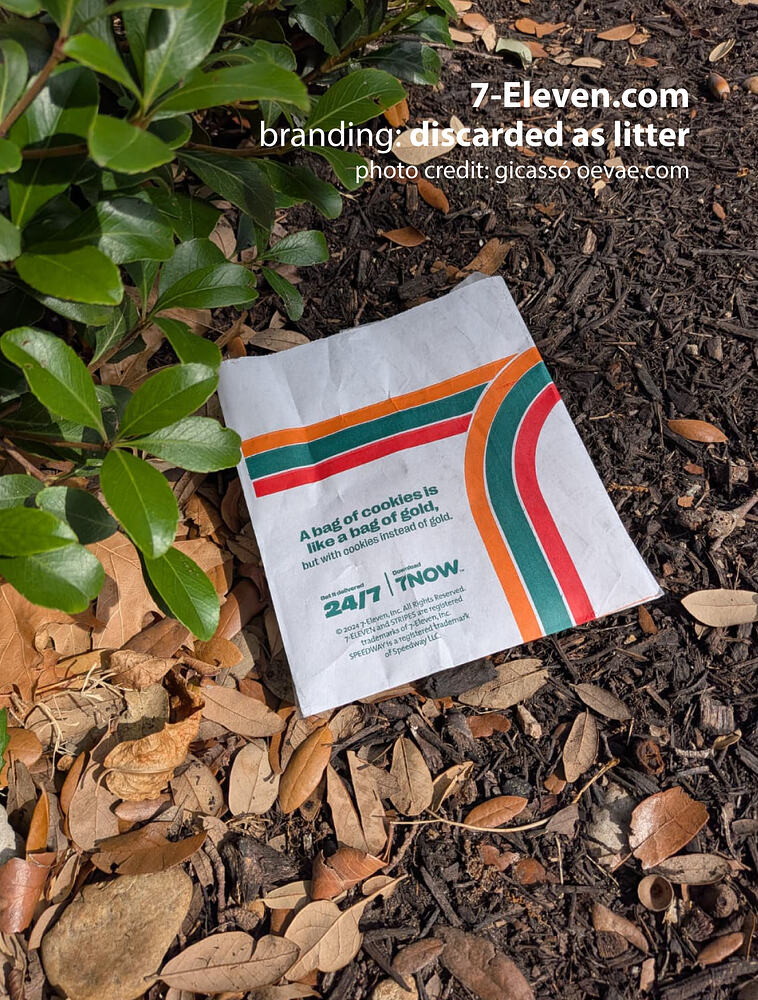
AUSTIN, TX 2026 Expanding on the new “Supergraphics” packaging design that drives recognition. The cool, yet bold, sweeping geometric stripes and flowing shapes popular on walls in the 1970s featured the famous Orange (#F4811F), Green (#008161), and Red (#EE2526), making up the “7” mocking the 7-Eleven logo.
Fast-food and convenience-store packaging serves as highly effective mobile advertising. Especially when discarded as litter, the distinct 7NOW-branded cookie bag essentially functions as an unpaid, ubiquitous billboard, extending the brand’s visibility deep into neighborhoods, roadways, and waterways. Unless, of course, someone acts on personal waste management duties and discards it in the nearest trash or recycling receptacle.
I was surprised that the packaging did not have a QR code, although it does say “Get it delivered. Download 7NOW,” but doesn’t say “app.”
There was no mention of the packaging being made of recycled materials, nor a call-to-action for recycling the cookie bag.
Apparently, Speedway is a subsidiary of 7-Eleven, acquired the gas station and convenience store chain from Marathon Petroleum. The $21 billion acquisition integrated thousands of locations under the 7-Eleven corporate umbrella. Making 7-Eleven the largest convenience store chain in North America – Headquartered in Irving, Texas, the company operates, franchises, and licenses more than 12,000 stores across the continent, including 7-Eleven, Speedway, and Stripes.
AUSTIN, TX 1963, when an entrepreneurial 7-Eleven outpost owner in Austin, Texas, decided to try a 24/7 business model for its store. The concept took off, and all 7-Elevens became 24-hour operations, seven days a week.
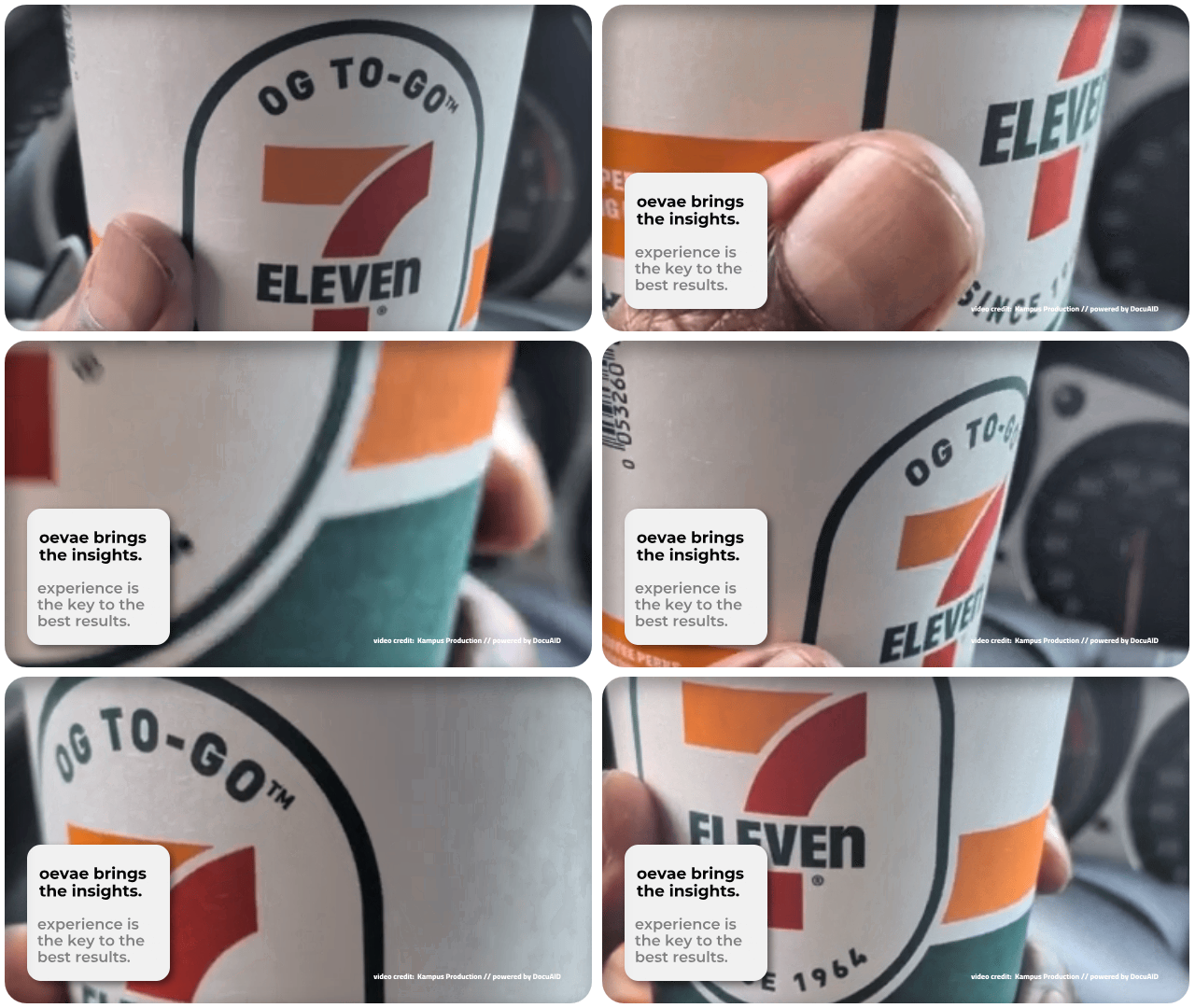
Dig a little deeper and you’ll find that the 7-Eleven OG TO-GO™ Since 1964 points to 7-Eleven’s Long Island, New York franchisee (exact name of the individual is not recognized in official corporate archives), who created the first to-go coffee – introducing the concept by selling fresh-brewed coffee by the cup in these stores, a decision that revolutionized the convenience and commuter coffee industry.
By contrast, the 7-Eleven “Evolution Stores” act as modern, experiential testing grounds that blend this classic heritage with premium, tech-forward, and specialized offerings.
The 7-Eleven heritage “to me” recalling meeting my friends to play one of the two pinball machines at a 7-Eleven in Aurora, Colorado. And, my current experience as an adult. Today, it’s a coffee, then it was a Slurpee or a “Suicide” (1970s - A mixture of all the fountain drinks in one cup), currently named “Dirty Soda”.
We’re a long way away from the glass coffee pots with the sizzling water underneath, and from drinking the last cup from a pot that’s been “cooked” to the point of what now looks like bad motor oil, aka “less favorable experience.”
7-Eleven coffee covers all of the bases, with “7REWARDS”, let you BUY 6 CUPS, GET THE 7TH FREE. This could mean a free Latte, Espresso, Cappuccino, Macchiato, Mocha, or an Americano. Reward programs aim to generate loyal customers aka, repeat business, but what about the old-fashioned customer service, where small talk and common-courtesy (timely responses, mindful tones, etiquette, and netiquette) was valued, practiced, measured, and used.
One bad customer experience can be recorded in the subconscious not as a list of facts, but rather a strong, emotion-driven memory. Promoted by the negativity bias and the peak-end rule, a mental shortcut to simplify memories. Because an intensely emotional moment and final impression is the most vivid, the brain heavily measures these specific data points when forming a lasting impression. For this reason, I say that every customer visit or interaction (POS) with your brand is an audit or an audition.
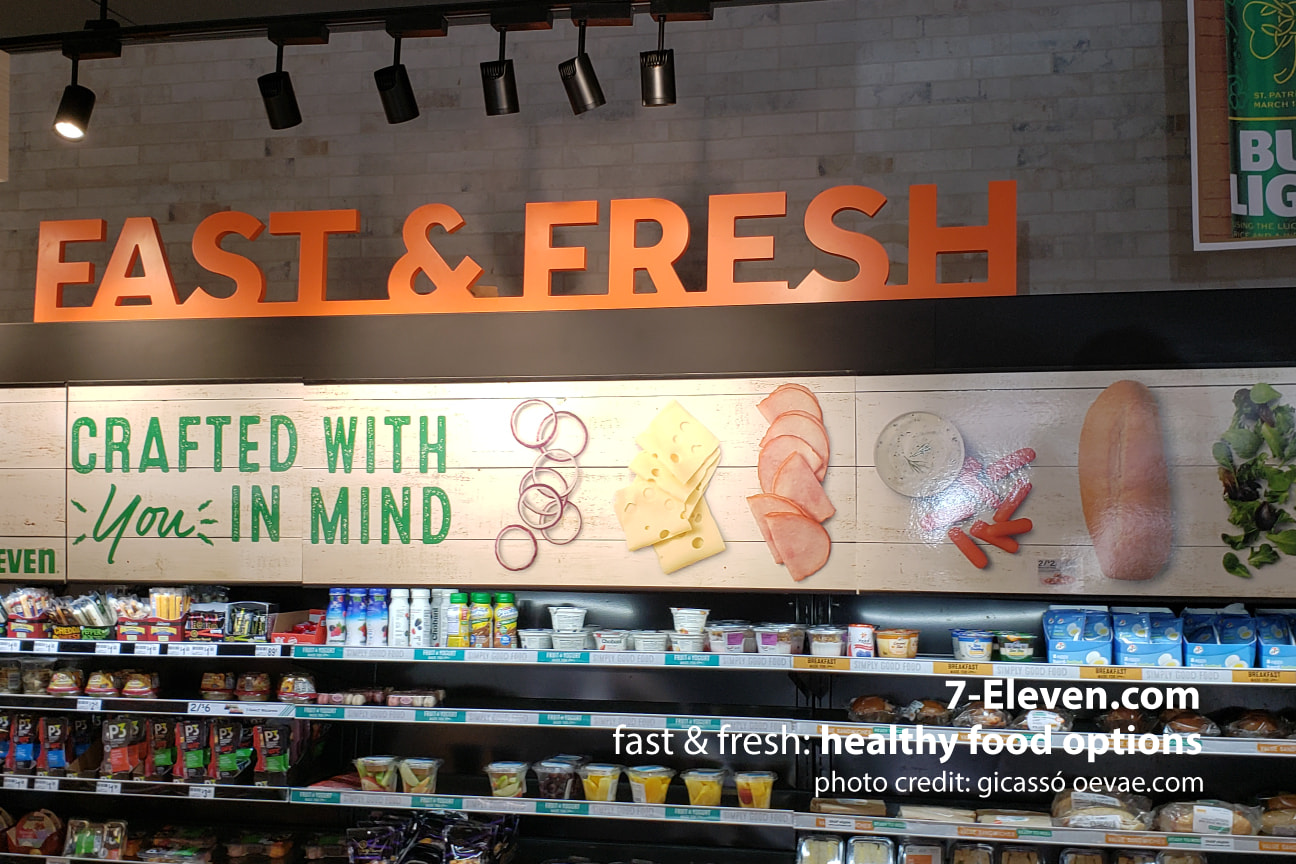
Really successful businesses are consistent, courteous, helpful, well-stocked, and forward-thinking. Like “Over 3000 Ways to Coffee Make it your own. Coffee beans, espresso beans, cold brew, creamers, milks, syrups, toppings—oh my! Create your own concoction. Or recreate one of our coffee recipes.” – 7-Eleven.com
From being the pioneer of selling coffee in portable, to-go cups, highlighting their long history in commuter culture compared to modern services like 7NOW and the use of Cup Insulation Technology – Double-wall paper cups use two layers of paperboard with an air gap between them keeps beverages hotter for longer.
This air pocket acts as an insulator, slowing heat transfer from the hot beverage to your hand, providing a comfortable grip without needing a separate cardboard sleeve like the Starbucks sleeves, which can easily slip off, break, or get misplaced.
Finally, we say "Oh thank heaven for 7-Eleven" – The famous slogan comes from an advertising campaign created in 1967 by Daniel Patrick McCurdy Sr., the radio creative director for the company's in-house agency in Dallas, Texas.
For local small business owners trying to stand out online, the hardest part of digital marketing often isn’t effort, it’s getting attention to translate into real customers. Social feeds move fast, ads get ignored, and even great products can struggle to earn brand awareness and trust.
That’s where video marketing benefits show up clearly: it helps people understand what a business offers, remember it, and feel confident engaging with it. With the right approach, video becomes one of the most practical business growth strategies for stronger customer engagement.
Understanding Video Marketing for Small Business
Video marketing is using video to attract, educate, and convert customers across the places people already spend time. That can include short social clips, website explainers, email videos, customer stories, and simple ads that answer common questions. It works well when attention is scarce because video communicates value quickly and builds familiarity.
It matters because video can improve ROI by turning one piece of content into many touchpoints across channels. It also supports customer acquisition by helping strangers feel like they know you before they visit or buy. Since 92.3% of internet users watch videos weekly, your message can meet them where they already are.
Think of a video like a helpful staff member who never clocks out. A 30-second “how it works” clip can reduce hesitation, while a behind-the-scenes story makes your brand feel human. That mix of clarity and storytelling is why businesses leveraging video keep growing. Stronger business fundamentals help you plan videos with clearer goals, tighter budgets, and more confident, data-backed decisions.
Strengthen Your Marketing Skills With Business Fundamentals
Once you understand why video marketing works, your next advantage is making stronger business decisions behind every campaign. Going back to school for a business degree can sharpen your marketing skills by strengthening the fundamentals that support planning, budgeting, and confident decision-making. By earning a degree focused on marketing, you can learn skills that can help your business thrive, so your video ideas are backed by clearer strategy instead of guesswork. Online degree programs also make it easier to keep running your business while you go to school at the same time; there’s additional information here to help you explore what that kind of program looks like.
Video Formats Compared by Goal
When you know the outcome you want, picking a video format gets much simpler. Use the table below to match common video types to the goal they serve best, plus the tradeoffs to plan for.
Option
Benefit
Best For
Consideration
Live videos
Builds real-time trust and interaction
Q&A, launches, behind-the-scenes
Needs confident delivery and moderating comments
Explainer videos
Clarifies a complex offer quickly
New services, landing pages, ads
Requires tight scripting and clear visuals
Demo videos
Shows how a product works
Ecommerce, software, booking process
Can date quickly as features change
Customer testimonials
Adds social proof and credibility
Higher-priced services, proposals
Needs willing customers and release permissions
How-to videos
Solves problems and supports SEO
FAQs, onboarding, troubleshooting
Requires consistency to build momentum
If you need ongoing visibility, it helps to know that educational videos are a format many teams keep investing in, which aligns well with how-to content. If your priority is faster conversion, demos and testimonials tend to answer purchase objections most directly. Knowing which option fits best makes your next move clear.
Video Marketing Questions Small Businesses Ask
Q: How much should I budget for video marketing when I’m just starting?
A: Start small and steady: set aside a monthly amount you can sustain for 90 days, even if it is just for one short video a week. Use your goal to guide spending, then reinvest only after you see traction. Many teams stick with video because it can pay off, and 87% of marketers report good ROI from video.
Q: How do I figure out my target audience for a video?
A: Pick one customer type and one problem per video. Use your top five customer questions, reviews, and sales calls to choose the topic and the exact words people use. Then write a simple promise: “This video helps you ____ without ____.”
Q: What tools do I need to produce decent videos without hiring an agency?
A: A smartphone, a $20 lav mic, a small tripod, and good window light can look surprisingly professional. Keep editing simple with templates, captions, and a consistent intro, then upgrade gear only when your process is repeatable.
Q: Which platforms should I publish on first?
A: Choose one “home base” where your audience already searches, then repurpose short clips for social. 93% of businesses use video as a marketing tool, so you do not need to be everywhere, just consistently present.
Q: How do I optimize video SEO with titles, keywords, hashtags, and descriptions?
A: Lead your title with the exact question you are answering and add a clear outcome. Put the main keyword in the first two lines of the description, include 3 to 5 specific hashtags, and add a simple call to action with one link.
Q: What metrics should I track to know if my videos are working?
A: Track watch time and retention to judge content quality, then clicks, leads, and sales to judge business impact. Pick one primary metric per goal, then compare results across videos in the same format.
Small Businesses Habits for Video Content Engagement
It’s easy to stall on video because budgets feel tight, tools feel confusing, and you don’t want to post something that falls flat. The steady path is a simple video marketing strategy: start small, stay consistent, and let real feedback guide video content creation, customer engagement tactics, and digital marketing integration over time. Done this way, marketing success becomes measurable and repeatable, more clarity on what resonates, stronger trust, and momentum that supports small business growth. Progress beats perfection in video marketing, so record and publish one short video this week, then review the results and make one improvement next time. That habit builds the visibility and connection that keep your business resilient as markets shift.
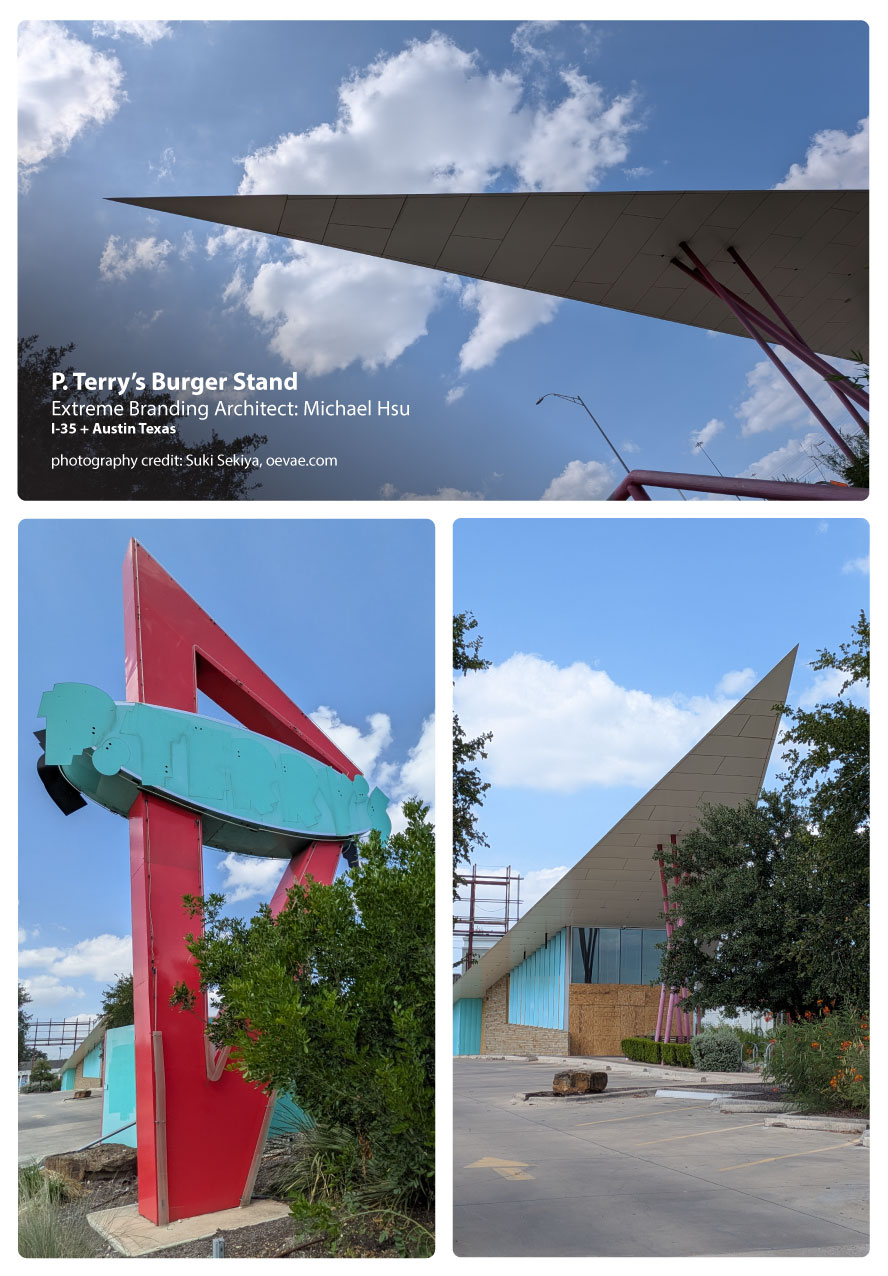
10 years ago (August 24, 2016), P. Terry's Burger Stand opened a flagship
restaurant at Capital Plaza beside I-35. The building was created to be
noticed. Its dramatic, futuristic Michael Hsu roofline reached toward
the highway and turned architecture into advertising.
Today, ten years later, that building is gone — not because the burgers
stopped selling or the brand stopped growing, but because the environment
around the business changed. And perhaps, one of the clearest lessons a small-business owner can take
from the enormous transformation underway along I-35. A smart strategy can
be right for years and still have to change when the world around it
changes.
P. Terry's had done many of the things businesses are told to do. It
chose a high-traffic location, aligned itself with a major transportation
corridor, invested in memorable design and deliberately chose
Extreme Branding so the building itself communicated
before a passing driver ever read the restaurant's name.
The strategy worked. The restaurant became a landmark. Then the artery changed.
“It just became a billboard for us for the last 10 years.”
P. Terry's co-founder Patrick Terry, discussing the Capital Plaza
flagship.
Change Doesn't Ask Permission From the Business Plan
For businesses around Rundberg Lane, Braker Lane and the surrounding
North Austin corridor, the problem is usually less dramatic than losing
an entire building, but the principle is the same. Mobility35 construction
is changing the physical environment customers learned to navigate.
An entrance moves. A ramp closes. Construction barrels obscure a
driveway. A familiar turn becomes inconvenient. A five-minute lunch trip
can become a twenty-minute nuisance.
The business can be fully open and ready to serve while appearing, from
the driver's perspective, difficult to reach.
That makes this a communication problem before it becomes a marketing
problem.
TxDOT has to explain how motorists move through a massive transportation
project. The business owner has a simpler responsibility:
tell the customer how to get to the front door today.
Customer Road Map
Here's the idea behind a Customer Road Map. Instead of asking customers
to interpret a construction diagram, give them the pieces of information
they actually need: the best exit, the available entrance, where to park
and whether another route will save time.
A QR code connected to a Mini Link can make that information flexible.
The same code printed on a window, receipt, menu or temporary sign can
point to the best route today and a different route next week. The
physical communication stays in place while the information behind it
changes.
That is why a QR Code Machine and Mini Link make sense in a construction
environment. They are not interesting because they are technology. They
are useful because they allow communication to move when the road moves.
Businesses should also keep up with current Mobility35 information rather
than waiting for customers to explain the latest closure.
TxDOT's Mobility35 site
provides current project information, while businesses can also
sign up for Mobility35 email updates.
Traffic Doesn't Disappear. It Goes Somewhere.
There is another side to construction that receives considerably less
attention.
When a customer decides a familiar restaurant is suddenly too difficult
to reach, that person usually does not stop eating lunch. They choose
another restaurant.
When an exit becomes inconvenient, the business before the exit may
suddenly become more attractive than the business after it. One company
loses spontaneous traffic. Another gains it.
So while one owner is asking, “How do I keep my customers
coming?”, another small-business owner may be looking at an
unexpected increase in traffic and asking, “How do I keep these new
people after the construction is over?”
Imagine someone walking into a restaurant and saying, “I normally go
farther down the road, but I'm not fighting that construction today.”
The road has just introduced that business to somebody else's customer.
Now the business has to earn the second visit.
Maybe the food is better than expected. Maybe the service is faster.
Maybe the customer likes the atmosphere or discovers a lunch special or
menu item they never knew existed. They may have arrived because of a
detour and return two weeks later because they found something worth
returning to.
Construction may create the first visit.
The experience creates the second.
That is why temporary traffic should not automatically be treated as
temporary business.
Give People Something Worth Traveling For
Directions solve one form of friction. They do not solve the entire
decision.
A customer deciding whether to make an inconvenient trip may also want to
know what is on the menu, what it costs, what the food looks like and what
kind of experience is waiting at the other end.
Those numbers do not mean every photograph will perform the same way.
They demonstrate something more useful: customers consume information
visually, and useful or appetizing information can keep working long
after it is posted.
The service-menu photograph answers a practical question. The food-truck
menu lets somebody make a buying decision before arriving. The restaurant
interior sells atmosphere. The food image sells appetite. And six seconds
of movement can sometimes communicate more effectively than an elaborate
commercial.
Google can provide reach.
Your brand should provide the experience.
Google Search, Maps, photographs, video and reviews can introduce
somebody to a business. But all of that happens inside Google's
environment.
A restaurant's own digital menu or Digital Flipbook can continue the
experience with food photography, short video, prices, specials,
directions, parking instructions, construction access information and
the business's own visual identity.
The goal is not to replace Google. It is to let Google make the
introduction while giving the business somewhere of its own to continue
the conversation.
A New Guest Can Leave a Longer Digital Trail Than the Visit
More guests can also create more digital exposure.
This is not about pestering every customer for another review. It is
about benefiting from the photographs, videos, reviews and detailed
experiences people naturally share when something is worth documenting.
A customer visits because the normal route to another restaurant was
inconvenient. They try something new. Maybe they take a photograph.
Maybe they write about the experience. The business responds.
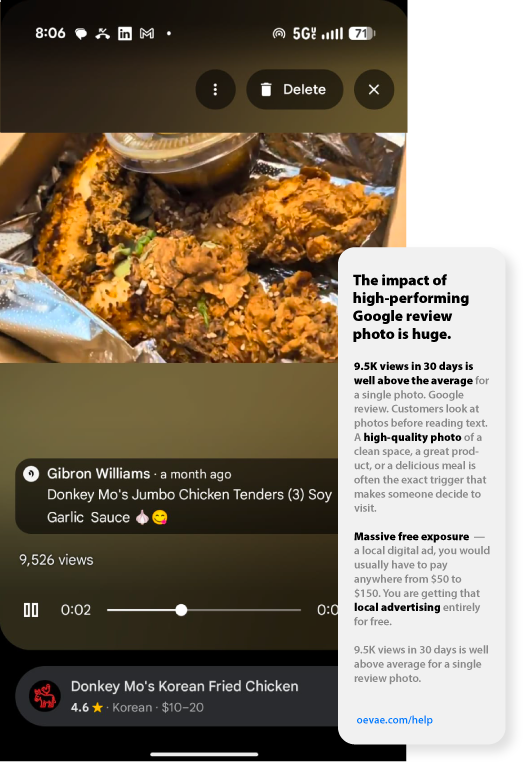
The meal ends. The digital interaction does not. One review-related image at Donkey Mo's Korean Fried Chicken approached
10,000 views in roughly 30 days.
Somebody else can discover that contribution tomorrow. Another customer
can read it next month. A thoughtful business response remains visible to
future customers who were never part of the original transaction.
That is how temporary traffic can begin producing a longer digital tail.
If a business wants to make returning easier, a QR code, Mini Link,
branded Digital Flipbook or Lead Capture experience can provide a simple
next step. Not because everybody needs to enter a marketing funnel, but
because returning should be easier than rediscovering.
The Difference Between a Location and a Business
That brings us back to P. Terry's Burger Stand – The Capital Plaza building mattered precisely because it was not generic.
P. Terry's deliberately chose Extreme Branding. Michael Hsu's futuristic roofline, color, geometry and relationship to I-35 were intentional. The
building itself became part of the message.
The highway changed. Building demolished. Landmark disappeared. The brand did not.
Extreme Branding made the location memorable. Change made the location temporary.
Adaptability allows the business to continue.
Small businesses have lived through enough disruption to recognize the
larger pattern. COVID accelerated curbside pickup, delivery, digital
ordering and contactless transactions. Other major events changed how
businesses think about security and access. Technology continually
changes how customers discover, evaluate and buy.
Mobility35 is changing something more physical:
how people move through Austin.
The disruption itself is not necessarily the opportunity.
The response can be.
How Small Businesses Can Maximize the Benefits of Change
For one business, adapting may mean giving regular customers a clearer
route to the parking lot. For another, it may mean recognizing that
unfamiliar customers are walking through the door because somebody else's
route became inconvenient.
Another business may discover that its menu deserves to be easier to
find, that a six-second video can communicate appetite, or that Google's
reach becomes more valuable when it leads into a branded experience the
business controls.
The larger lesson is not to fear change or pretend every disruption is
good. It is to avoid confusing a successful strategy with a permanent
environment.
P. Terry's had the traffic, the product, the brand, the location and the
extraordinary building.
The environment still changed.
That is not an argument against long-range planning.
It is an argument for putting adaptability inside the plan.
Useful business information should reaffirm what owners already know,
confirm what they suspect, establish something they did not know and help
them benefit from something they did not know was available to them.
Ten years ago, a futuristic roof pointed into the Austin sky beside
I-35.
Today, the building is gone. The company continues. The highway
continues. Austin continues.
Traffic moves.
Opportunity moves with it.
Construction redirects traffic.
Smart businesses redirect opportunity.